How can psychiatric and social service providers work with the impact investing community to help young adults at every stage of the recovery journey? That’s the challenge we took up with the Bundesinitiative Impact Investing and the innovation arm of Inab-youth, which works with at-risk youth to help them manage the transition into adulthood.
Psychiatric illness is rising rapidly among young people. Experts see this as part of a larger trend involving digital addiction, social isolation and a lack of orientation. These developments are putting additional pressure on Germany’s chronically understaffed psychiatric clinics and social service providers and generating rising costs for society as a whole.
What’s needed are cross-sector, integrative solutions that go beyond in-patient-focused medical care, concepts that combine medical treatment with therapies and other social services that promote independence for those impacted and their support communities. This needs to include the right mix of semi-inpatient, outpatient residential and reintegration programs, including vocational training in a safe setting. Otherwise, all too many patients find themselves moving in and out of clinics in what is known as the “revolving door,” which results in enormous, dynamically developing medical and social costs. At the same time, there are increased requirements for low-threshold access and prevention.
Working with the Bundesinitiative Impact Investing, Inab-Youth, and Schilling Architecture, Skynative has developed a modular concept that facilitates collaboration between care providers and fulfills the criteria of impact investors for transparency, measurable impact and risk management.
Patients and their support networks: Holistic care that promotes healing, agency and independence
Medical and social service providers: Business model and collaboration concept; access to necessary financing for construction and start-up phase
Employees: Coaching to manage multistakeholder collaboration in small, self-organized teams
Impact investors: A transparent, measurable, impact-driven approach to investing in holistic psychiatric care for young people that can be replicated across geographies and later other patient groups
Builders and project developers: Modular, ecological, well-priced building designs tailored to the needs of multidisciplinary psychosocial care.
Flexible, aesthetic, ecological, plug and play
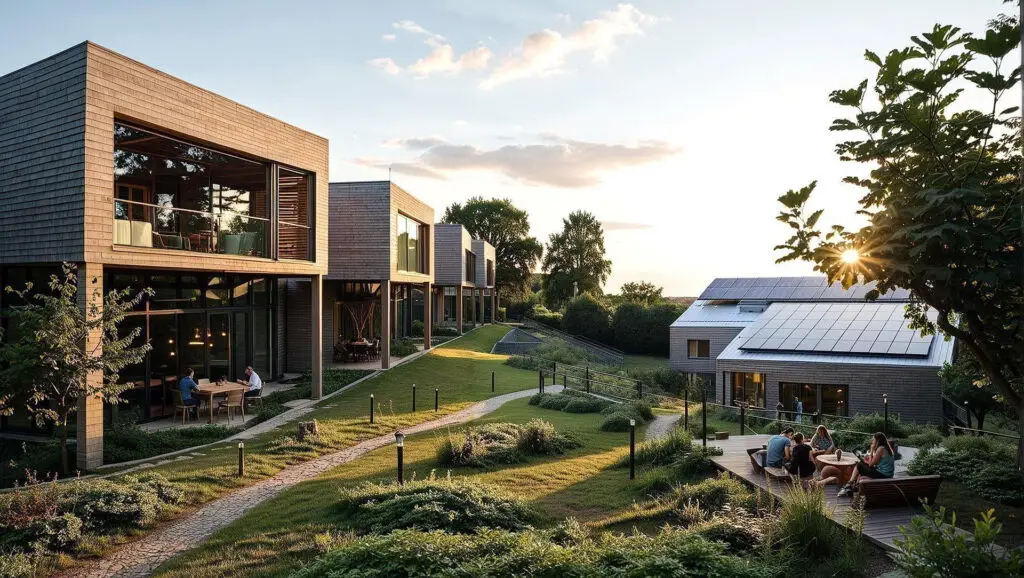
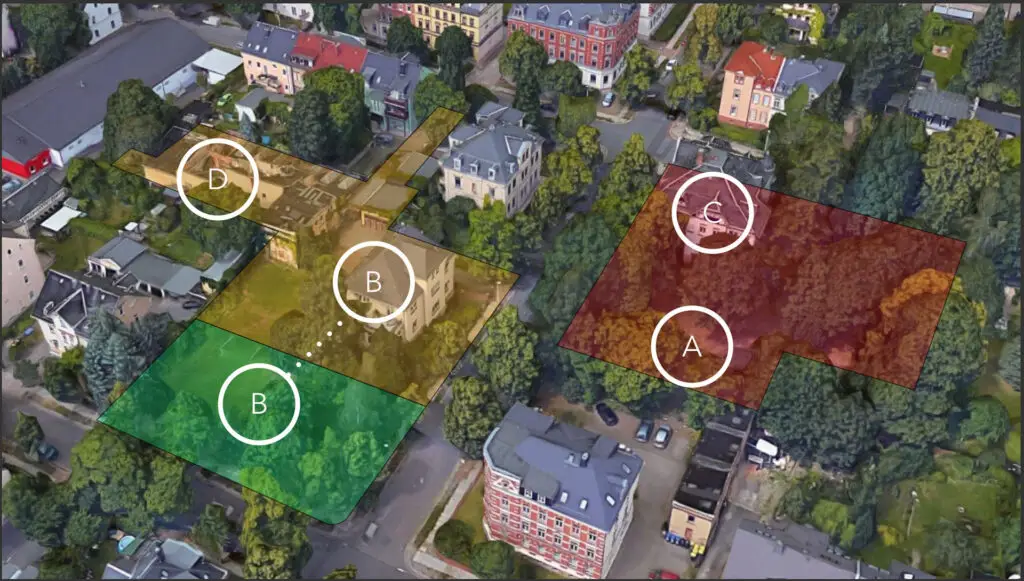
Design of an “outpatient” village” with separate communal living quarters combing various psychosocial services tailored to youth and young adults in an urban neighborhood close to nature. The close knit, extendable complex is in close proximity to complementary medical service providers and offers short- and long-term living space for caregivers.
The “outpatient village” comprises four basic settings: a low-threshold psychosocial contact point, a modular psychosocial patient living area with common spaces, a variable-use living concept for employees, and a neighborhood workshop for patients, local residents, and care staff.
The building and healing framework is supported by a set of qualitative and quantitative KPIs tailored to the needs of impact investors. These include reducing patient stays and covering existing gaps in patient and care network support to prevent the “revolving door” effect.
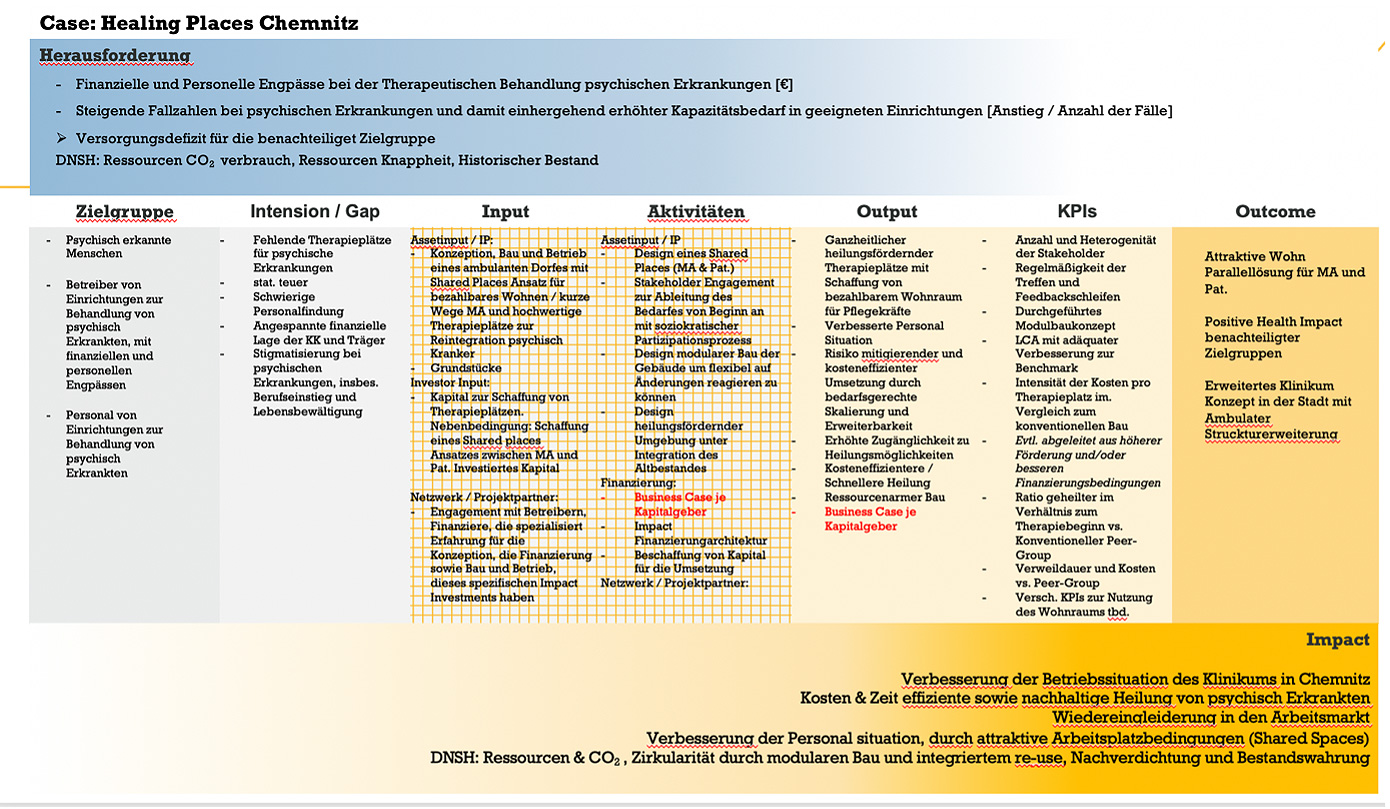
Together with the BII and our other partners, we are testing the concept with various types of impact investors. To prepare for this, we have held a series of stakeholder dialogues with the impact investing community and documented the results in the impact matrix below
After the testing phase, various business model designs will be standardized, increasing attractiveness for the impact community and providers. The business model designs foresee varying roles for individual stakeholders depending on their strategies and expertise.
Based on the respective business model, there are specific business cases that can be specifically targeted at different types of investors, such as private equity, family offices, public funding, etc. These must be addressed differently within the framework of a “financial architecture” based on the respective business case.